Straits like Hormuz and Malacca are pressure points where commerce and power converge. What once defined success now defines vulnerability
Prof. Syed Munir Khasru
South China Morning Post
May 20, 2026
US President Donald Trump’s visit to Beijing, at a time of rising tensions over Iran, sanctions, tariffs and Taiwan, shows how far the Hormuz crisis has travelled beyond the battlefield.
What began as a regional war is now touching energy markets, currency politics and the balance of influence between Washington and Beijing. The US is trying to keep Gulf and Asian partners anchored to the US dollar system, while China continues to push for wider use of the renminbi in trade transactions.
Whether diplomacy can prevent a wider economic rupture remains uncertain. But one lesson is already clear: the Strait of Hormuz is no longer just a regional security problem. It is a warning about every strategic chokepoint on which the global economy depends. Shipping security is hard power in real time, and strategic straits have become pressure points where geography, commerce and power collide. Nothing illustrates this more clearly than the Strait of Hormuz.
The International Energy Agency (IEA) estimates that around 20 million barrels per day of crude oil and petroleum products passed through Hormuz in 2025, roughly a quarter of the world’s seaborne oil trade, with about 80 per cent of those flows destined for Asia. Qatar and the United Arab Emirates rely on the route for liquefied natural gas exports, which together account for nearly a fifth of global LNG trade.
Hormuz disruption showed how quickly a chokepoint can become a macroeconomic event. Global oil supply fell by 10.1 million barrels per day in March, the largest disruption in history, as oil prices recorded their largest-ever monthly gain and North Sea Dated crude traded around US$130 a barrel, about US$60 above pre-conflict levels.
Nonetheless, the deeper lesson should extend beyond Hormuz to the Strait of Malacca. Chokepoints that appear efficient can quickly become points of systemic fragility; workarounds that exist on paper often prove far less reliable under stress and even short-lived disruptions can trigger outsize economic consequences. As geopolitical competition intensifies, control over these passages is increasingly contested.
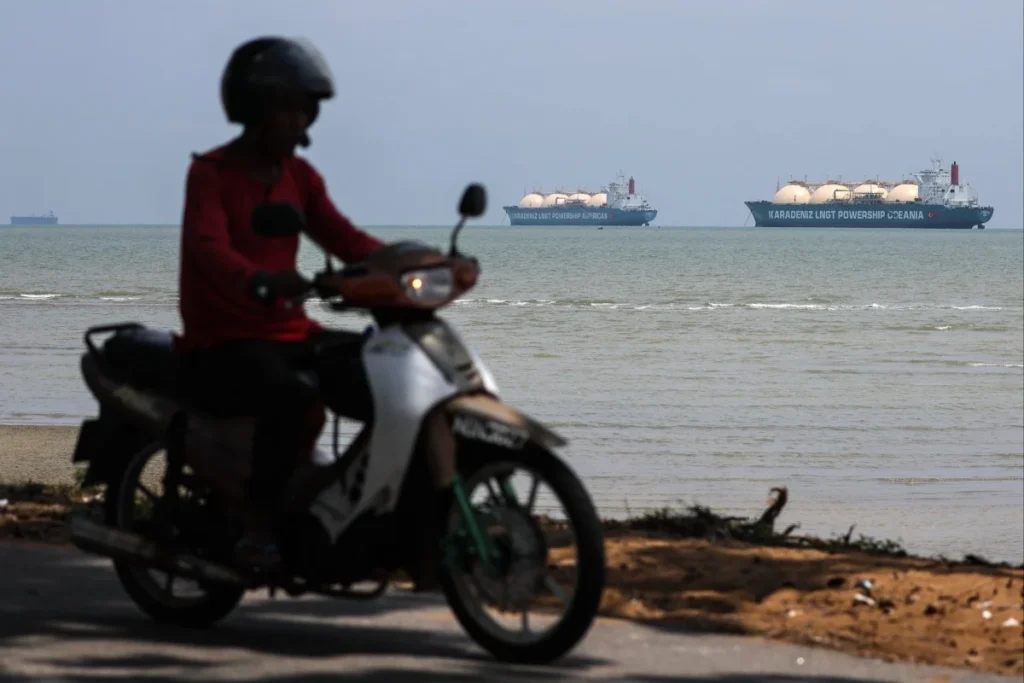
If Hormuz is the world’s most volatile energy valve, Malacca is its busiest artery. Carrying nearly 22 per cent of global maritime trade – 23.2 million barrels of oil per day and more than 102,500 ships a year – the strait is the physical foundation of Asia’s economic model.
Linking the Indian and Pacific Oceans, it provides the shortest maritime route between Middle East, Europe and East Asia, yet narrows to only 2.7 kilometres at the Phillips Channel. For decades, this route was seen as fast, cheap and optimised for globalisation. That same efficiency now looks dangerously close to fragility.
It is often assumed that there are alternatives. In theory, vessels can be diverted through the Sunda or Lombok Straits. In practice, these are costly detours. Bypassing Malacca would add to journey time, delay shipments and push up prices, while some very large vessels already avoid these alternatives. Overland and pipeline alternatives also lack viability.
They may reduce risk exposure, but they cannot replace the scale, speed and commercial logic offered by the maritime corridor. Hormuz offers a warning here: the IEA estimates that bypass capacity through Saudi and UAE pipelines is only around 3.5 to 5.5 million barrels per day, compared with nearly 20 million barrels per day exported via Hormuz last year.
Disruptions are non-linear. A chokepoint does not need to close to damage the system. A threat, a toll proposal, a naval incident or a rise in insurance risk can be enough. The UN’s trade and development agency has warned that maritime trade is becoming more volatile as routes grow longer and more political. Its secretary general, Rebeca Grynspan, put it bluntly: “Distance is no longer geography; it is geoeconomics.”
The Suez and Red Sea disruptions offer the clearest recent parallel. By mid-2024, ship tonnage crossing the Gulf of Aden was down 76 per cent, Suez Canal tonnage was down 70 per cent and arrivals around the Cape of Good Hope had surged 89 per cent. Longer routes raised global vessel tonne-mile demand by 3 per cent and container ship demand by 12 per cent.
Such dynamics would be amplified in the Strait of Malacca. China is particularly exposed, with about 75 per cent of its seaborne crude oil imports from the Middle East and Africa passing through this corridor. Recent comments already reflect this shift. Indonesian policymakers have seemingly considered the idea of imposing transit charges on vessels passing through Malacca. While not implemented, the proposal underscores a growing recognition that control over chokepoints can translate into economic and strategic leverage.
Meanwhile, Singaporean Foreign Minister Vivian Balakrishnan said his country would not negotiate for safe passage or accept toll-based access to critical waterways, maintaining that navigation rights are guaranteed under the UN Convention on the Law of the Sea.
That tension between control and openness points to a harder reality: strategic petroleum reserves and emergency releases can buy time, but they cannot remove structural dependence. For Asia, resilience must mean more storage, diversified supply contracts, credible alternative routes, stronger maritime coordination and faster investment in energy systems less exposed to fossil fuel chokepoints.
The global economy remains reliant on a handful of chokepoints, often described as “critical nodes”. They are now more than technical passages. They are pressure points where geography, energy, finance and power converge. What once defined success now defines vulnerability. The priority must shift from efficiency alone to resilience and security.
https://www.scmp.com/opinion/china-opinion/article/3353360/malacca-strait-could-be-next-hinge-point-if-asia-isnt-careful



0 Comments