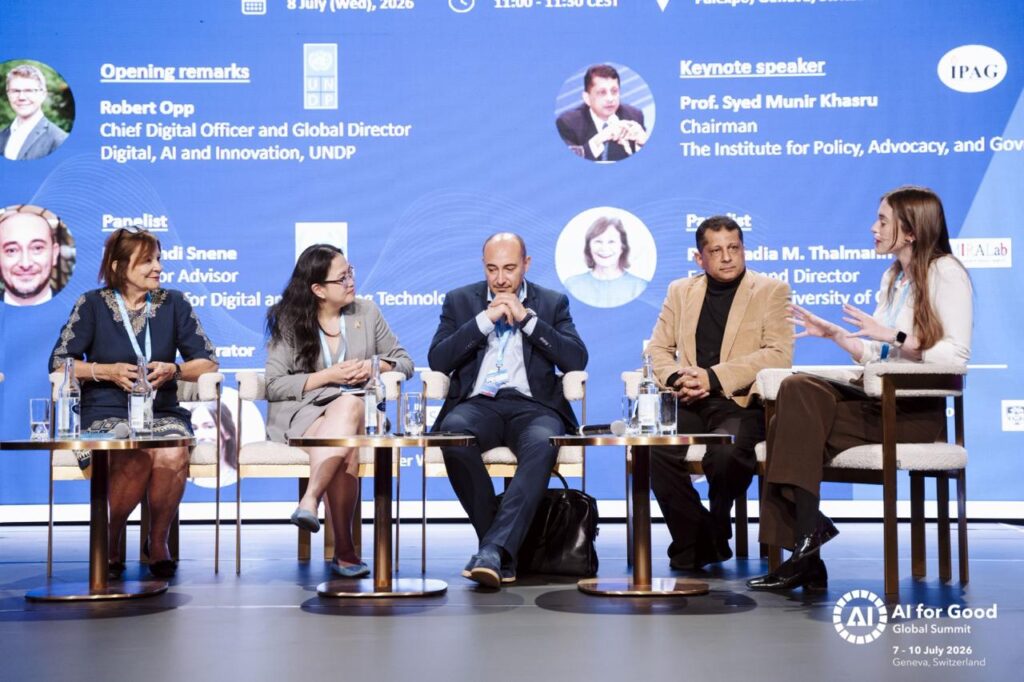
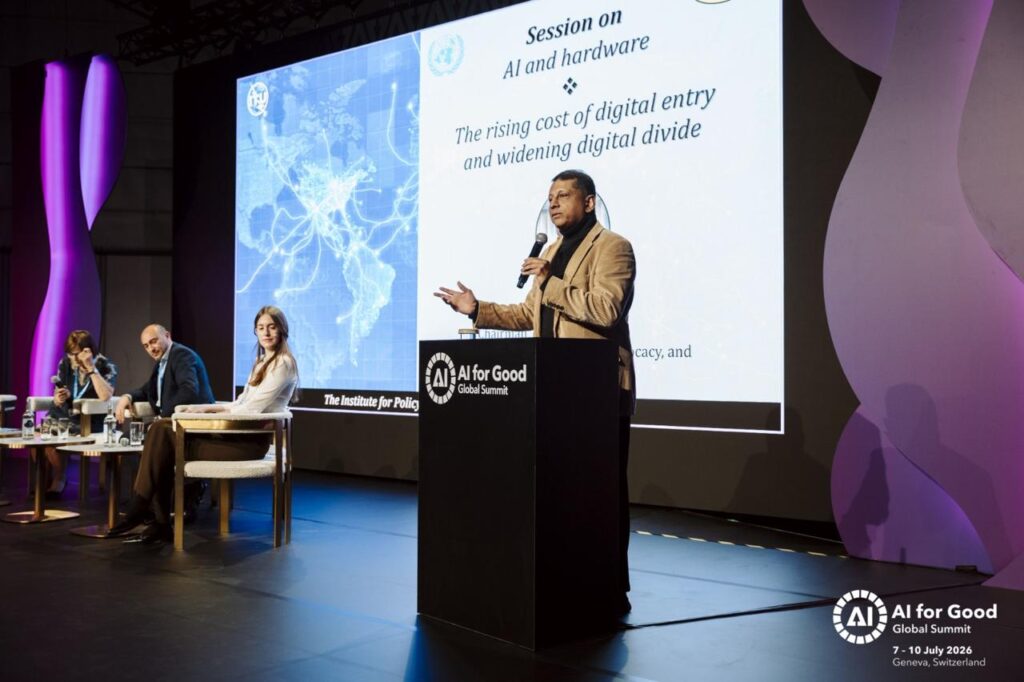
Prof. Khasru made a keynote speech at a session, AI for Good Summit in Geneva, jointly organized by UN, ITU, & IPAG to be held on July 8 (Wed), 11:00 am CEST
The rapid emergence of Artificial Intelligence (AI) is reshaping global digital development and creating a new dimension of the digital divide. While earlier debates focused on internet connectivity, devices and data affordability, meaningful participation in the AI economy now also depends on access to computing power, semiconductors, cloud services, data centers, reliable electricity and technical expertise. Countries lacking these resources risk becoming dependent consumers of foreign technologies rather than active contributors to AI-driven growth.
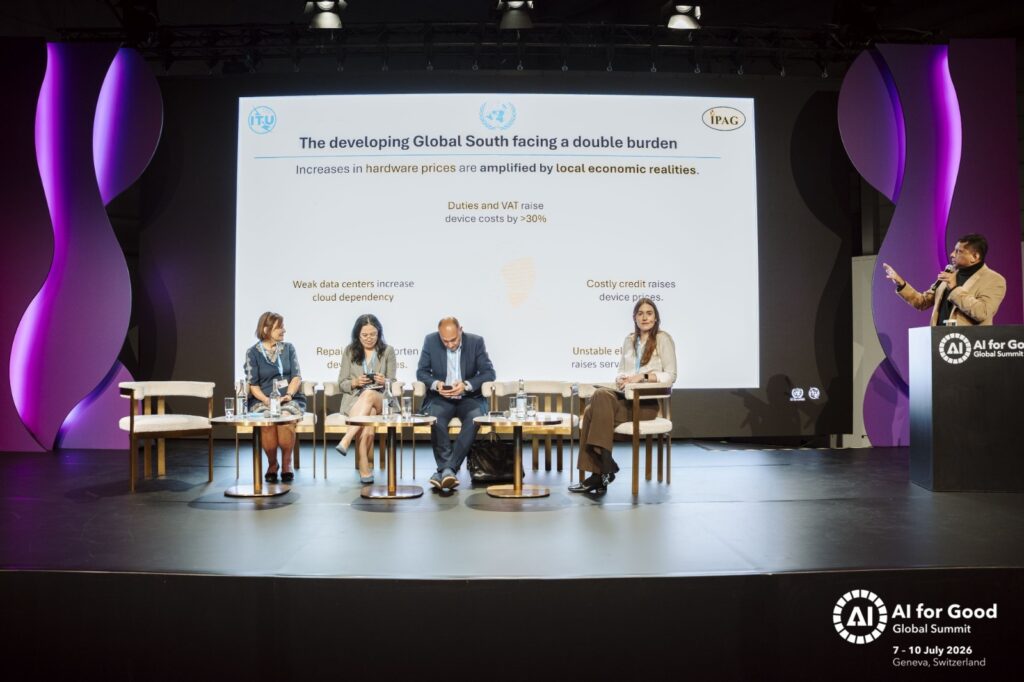
Against this backdrop, the Institute for Policy, Advocacy and Governance (IPAG), in collaboration with the International Telecommunication Union (ITU), convened the session “AI and Hardware: The Rising Cost of Digital Entry and Widening Digital Divide” on July 8, 2026, at the AI for Good Global Summit in Geneva, Switzerland.
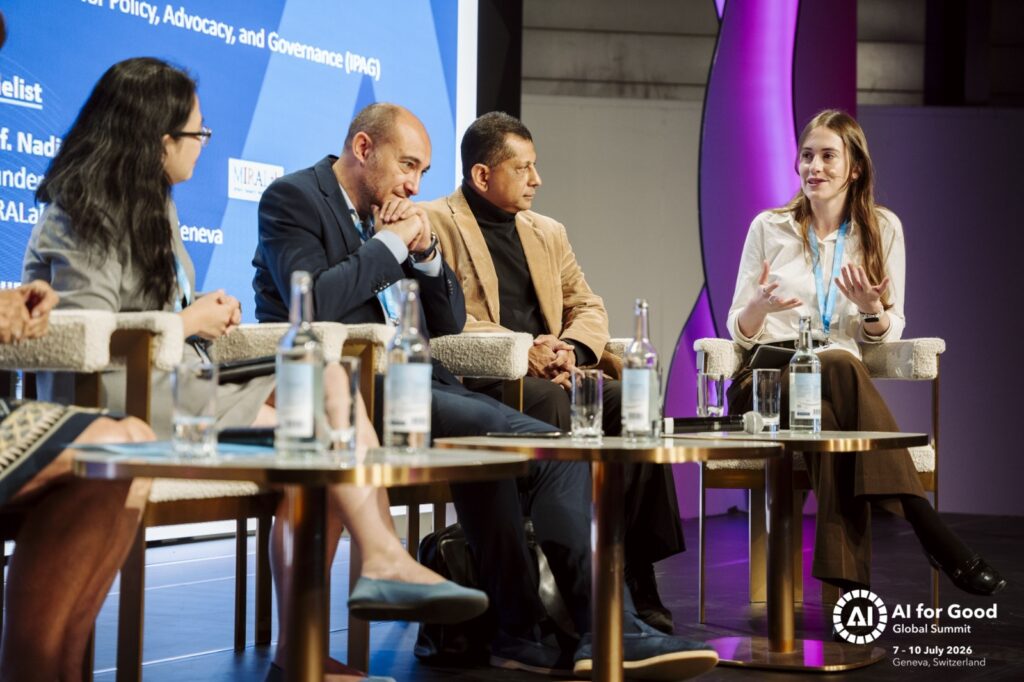
Spearheaded by IPAG Chairman Prof. Syed Munir Khasru, the session brought together experts from the United Nations, UNDP, the University of Geneva and the Stimson Center. Speakers included Dr. Mehdi Snene, Ms. Yu Ping Chan and Prof. Dr. Nadia Magnenat Thalmann, while Ms. Giulia Neaher moderated the discussion.
The session examined the transition from the connectivity divide to the compute divide; the hardware, energy and data-center requirements of AI; the risks of technological dependence and declining digital sovereignty; and the need for shared computing facilities, smaller AI models, local-language systems and institutional capacity building.
The discussion emphasized that inclusive AI development requires more than connectivity. It depends on affordable infrastructure, skilled professionals, reliable energy, enabling policies and stronger national capabilities. Participants called for international cooperation, shared compute resources and greater investment in locally relevant technologies to ensure that AI supports inclusive development rather than deepening inequalities between technologically advanced and infrastructure-constrained countries.
Spoke in a plenary session in the Forum on AI and Citiverse 2026 in Tampere, Finland on “People first: AI for better cities: Human-centred, inclusive and sustainable urban innovation.” Among others the session examined mechanisms for ensuring AI-driven urban growth remains inclusive and sustainable. The central question being: how do we ensure that the […]
Prof. Syed Munir Khasru NIKKEI AsiaSeptember 22, 2026 https://asia.nikkei.com/opinion/engagement-with-taliban-can-pave-the-way-for-change-in-afghanistan Isolation could be counterproductive as Kabul sits at a geopolitical chokepoint Five years after the Taliban returned to power in Afghanistan, the world faces an uncomfortable reality: isolation has neither transformed the regime nor improved the
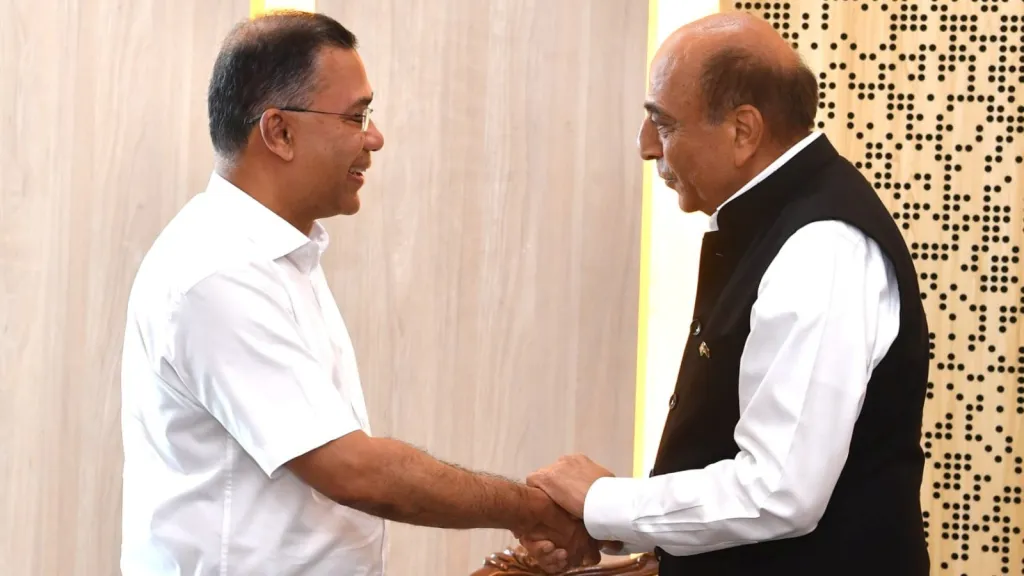
Prof. Syed Munir Khasru The Indian ExpressSeptember 8, 2026 https://indianexpress.com/article/opinion/columns/high-commissioner-dinesh-trivedi-delhi-dhaka-sheikh-hasina-10868293 Visas, borders, water, trade and extradition are ultimately matters of policy. Dinesh Trivedi’s diplomacy can create momentum; whether the reset advances, and whether Tarique Rahman visits India, will depend on what Delh




0 Comments