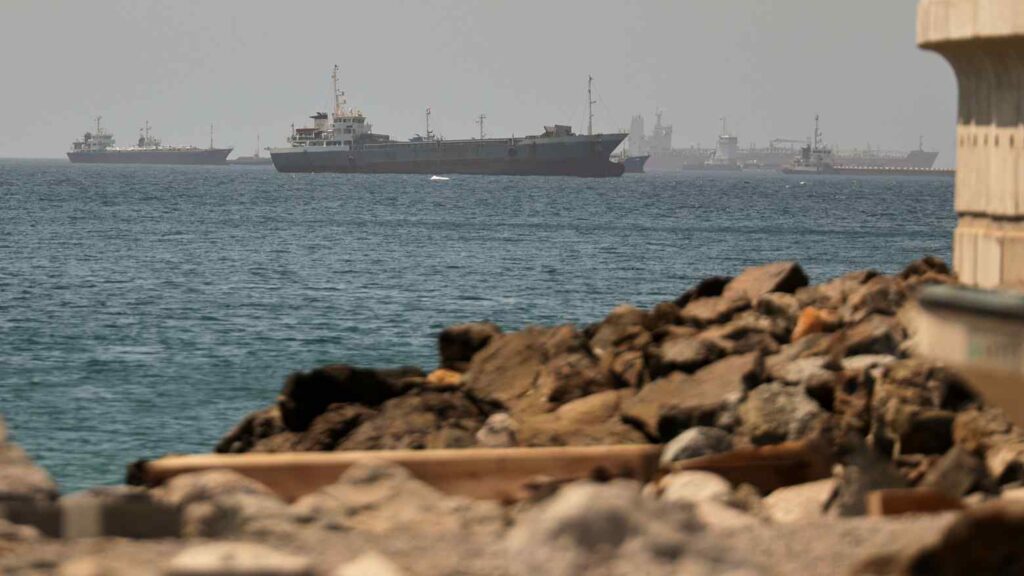
The U.S.-Iran war has made it clear that modern warfare is measured not just by where missiles fall, but by how far its shockwaves travel. Today’s conflicts do not need conquered territory to destabilize the world. They only need to touch the systems that keep it running. Nowhere is this more visible than in the Strait of Hormuz.
More than a maritime passage between Iran and Oman, it is the world economy’s most consequential pressure point. Nearly 20 million barrels of oil pass through the strait daily, making it a direct economic risk for energy importing countries. Europe carries a $28 billion extra energy bill, and Latin America and the Caribbean, at 59% of gross domestic product in public debt, have no fiscal buffer left, according to the IDB.
The repercussions fall unevenly, and more acutely in the Persian Gulf. Saudi Arabia and the United Arab Emirates can reroute only 3.5 million barrels to 5.5 million barrels per day through pipelines, while Iran, Iraq, Kuwait, Qatar and Bahrain have no bypass at all. The World Bank forecasts Gulf growth to collapse from 3.9% in 2025 to near zero in 2026. The vulnerability extends eastward too. For China, India, Japan and South Korea — which depend on Gulf energy to keep factories running and power grids stable — every contested week in the Strait adds pressure on operations and costs across the region.
The interim ceasefire was declared “over” by President Donald Trump on July 14, stating U.S. strikes would continue until enough damage had been inflicted. The U.S. reimposed its naval blockade and struck Iranian missile, drone and military facilities. Tehran retaliated against Bahrain, Kuwait and Jordan, widening the conflict to states hosting U.S. forces.
As both countries accuse each other of violating the ceasefire agreement, the issue is not whether the strait is formally open or closed. The deeper danger is whether it can be treated as reliably safe. A ceasefire cannot by itself rebuild trust in the systems through which energy, food, data and commerce move. This is why the war should not be understood only as a Middle Eastern security crisis, but a warning about the fragility of the global system itself.
For decades, states measured security through control of territory, resources, military assets and sea lanes, a view that has now become obsolete. What matters now is not who holds power, but who can absorb shocks without breaking. In a multipolar world, competition over energy, minerals, technology, trade routes and strategic influence is inevitable. However, without red lines, that competition can damage the very systems on which all countries depend.
The world needs a new resilience model, not a slogan about self-sufficiency, nor a fantasy of total independence. No modern economy can isolate itself from global shocks. What countries need is a practical SHIELD: (S)tability, (H)uman essentials, (I)nfrastructure, (E)nergy, (L)ogistics, and (D)ata — the six pillars that determine the ability to weather shocks.
Stability is the first pillar because external shocks rarely remain external. In the wake of the war, global growth is expected to slow to 2.5% in 2026, the weakest since the COVID-19 pandemic, while global inflation is expected to rise from 3.3% to 4.0%, according to the World Bank, turning a regional conflict into a domestic test of prices, debt and public trust. Countries that survive this best will be those that built economic stability through fiscal buffers, diversified imports and inflation-response mechanisms before the crisis arrived, not after.
The second pillar is human essentials, which primarily comprise food and water. The crisis has already cascaded from energy into food, with the World Food Programme estimating that a prolonged conflict could push 45 million people into acute food insecurity. Water is equally exposed. Desalination supplies nearly all of Qatar’s drinking water and around 90% of Bahrain’s, leaving cities like Doha and Manama dependent on a handful of vulnerable coastal plants. A resilient economy must treat fertilizer access and agricultural production not as humanitarian concerns but as security priorities.
Infrastructure is the third pillar. Ports, grids, roads, satellites and shipping lanes are strategic systems, and the war proved how exposed they are. A single Iranian strike on Qatar’s Ras Laffan complex wiped out 17% of its liquefied natural gas capacity and $20 billion in annual revenue, proving that the next crisis may come not from a shortage of oil, but from one of disabled facilities. Resilience must require alternative routes, backup power, regional grids and stronger maintenance of physical and digital infrastructure.
Energy is the fourth pillar. QatarEnergy, the world’s largest LNG exporter, declared force majeure on contracts with Italy, Belgium, South Korea and China. Dutch gas prices rose over 50% and Asian LNG jumped 39% intraday after the Ras Laffan strike. The lesson is that energy resilience demands more than diversifying suppliers. It also requires strategic reserves and a faster, more realistic transition toward cleaner, diversified energy systems.
Logistics is the fifth pillar because even when goods are available, they matter little if they cannot move. Container freight spot rates have surged by 80%, while Strait of Hormuz trade flows remain 90% below normal, leaving hundreds of ships and thousands of sailors stranded in the Gulf since February. Countries that invest early in alternative trade corridors, regional stockpiles, port readiness and flexible procurement will be far better placed to absorb the logistical disruptions.
Data is the sixth and final pillar. In every crisis, information becomes as important as supply. Five submarine cable systems transit the strait and the war simultaneously closed both Gulf data corridors. In 2024, a single severed Red Sea cable disrupted a quarter of regional traffic and took five months to repair. Drones struck data centers in Bahrain and the UAE, and a 28,000-mile undersea cable project was also suspended amid the war. Developing nations need their own early-warning systems, not borrowed ones.
SHIELD is not just an individual’s call for grand global harmony. It is a pragmatic resilience model advanced by this author in a world where competition is inevitable but catastrophe is not. The task ahead is to stop competition from turning scarcity into instability, infrastructure into vulnerability and crisis into exclusion. Global resiliency will not belong to the strongest, but to those who prepare before the next shock arrives. Smarter and stronger nations will figure out ahead of time that the world has changed, grasp what it can become, engage in planning and create strategy that enables them to SHIELD themselves from future shocks.
Spoke in a plenary session in the Forum on AI and Citiverse 2026 in Tampere, Finland on “People first: AI for better cities: Human-centred, inclusive and sustainable urban innovation.” Among others the session examined mechanisms for ensuring AI-driven urban growth remains inclusive and sustainable. The central question being: how do we ensure that the […]
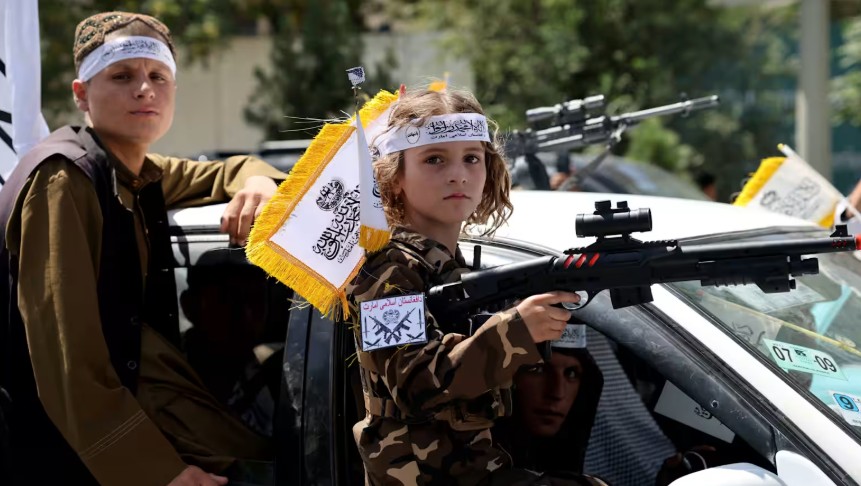
Prof. Syed Munir Khasru NIKKEI AsiaSeptember 22, 2026 https://asia.nikkei.com/opinion/engagement-with-taliban-can-pave-the-way-for-change-in-afghanistan Isolation could be counterproductive as Kabul sits at a geopolitical chokepoint Five years after the Taliban returned to power in Afghanistan, the world faces an uncomfortable reality: isolation has neither transformed the regime nor improved the
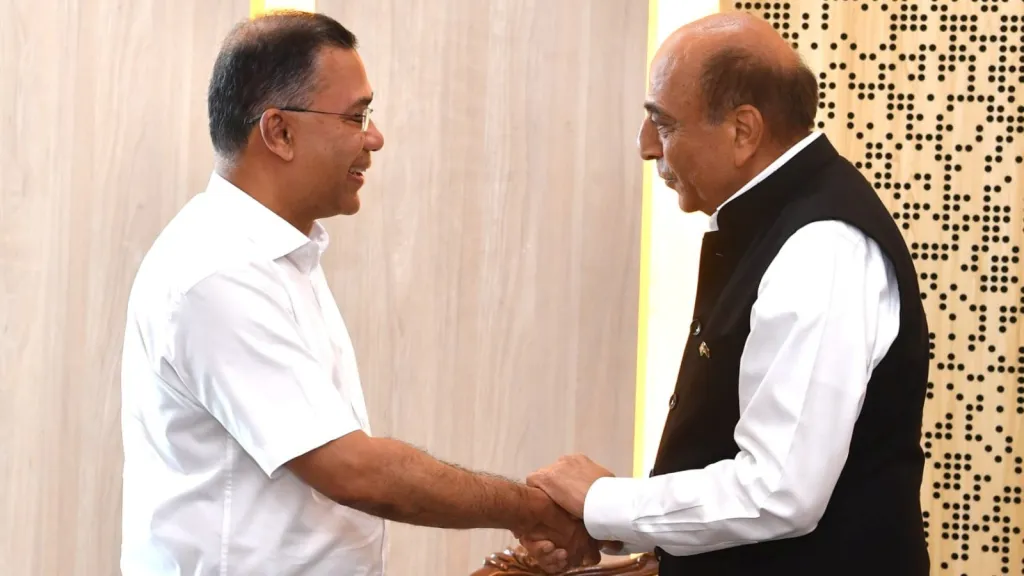
Prof. Syed Munir Khasru The Indian ExpressSeptember 8, 2026 https://indianexpress.com/article/opinion/columns/high-commissioner-dinesh-trivedi-delhi-dhaka-sheikh-hasina-10868293 Visas, borders, water, trade and extradition are ultimately matters of policy. Dinesh Trivedi’s diplomacy can create momentum; whether the reset advances, and whether Tarique Rahman visits India, will depend on what Delh


0 Comments