Prof. Syed Munir Khasru
Nikkei Asia
December 31, 2025
https://asia.nikkei.com/opinion/afghanistan-is-once-again-proving-that-geography-is-destiny
Four years after the chaotic American withdrawal from Kabul, Afghanistan has emerged as an unexpected arena of great power competition. The Taliban’s return to power in August 2021 did not end the country’s geopolitical significance, it redefined it. What was once a theatre of counterterrorism has become a frontier where regional powers jostle for influence, economic access and strategic advantage. India reopens its embassy while Pakistan expels refugees. China offers zero-tariff trade while Russia extends formal recognition. The contest for Kabul is reshaping South Asian rivalries and drawing in global powers, making Afghanistan a litmus test for the post-American order in the region.
For two decades, India maintained a significant presence in Afghanistan, investing over $3 billion in infrastructure and reconstruction. Roads, dams, schools and the Afghan parliament building bore the stamp of Indian development assistance. When the Taliban swept back into power, New Delhi initially retreated, closing its embassy and watching nervously as its investments fell into the hands of a regime it never trusted.
On the other hand, Pakistan’s relationship with the Taliban tells a starkly different story, one of unmet expectations and strategic miscalculation. Pakistan’s relationship with the Taliban was once its most reliable foreign policy asset. Islamabad provided sanctuary, diplomatic cover and strategic depth during the insurgency years. The expectation was clear: A Taliban-led Afghanistan would be a pliant neighbor, extending Pakistan’s influence and countering India’s presence.
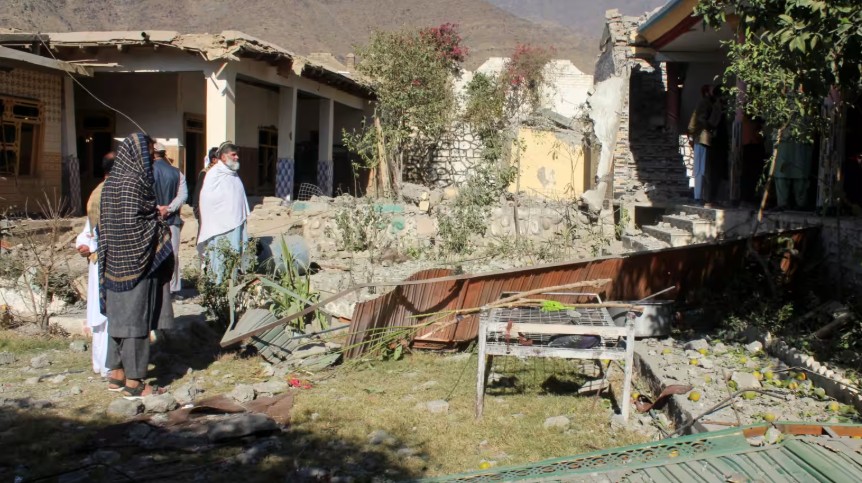
Reality has proven more complicated. Recent months have seen armed clashes along the disputed Durand Line border, with Islamabad accusing militants of launching cross-border attacks from Afghan soil. The Taliban have denied the allegations, but Pakistan has responded with force: mass expulsions of Afghan refugees, border closures and an increasingly hostile posture toward the regime it once championed.
The economic fallout has been severe. Trade disruptions and border closures have battered commercial ties, forcing Pakistan to eventually reopen humanitarian and transit routes after consultations with the United Nations. The reversal underscores a painful reality for Islamabad: The Taliban are not proxies, they are rather sovereign actors with their own agenda. This dynamic creates a bitter irony with geopolitics having very little appetite for a vacuum.
As Pakistan’s influence wanes, India’s measured engagement gains strategic currency. India’s recent decision to reopen its embassy in Kabul, coinciding with Taliban Foreign Minister Amir Khan Muttaqi’s visit to New Delhi, signals a strategic recalibration. This represents the highest-level engagement between the two sides since 2021. The logic is straightforward: If India does not engage, Pakistan will dominate, and decades of soft-power investment will be lost.
India’s approach remains carefully calibrated. There is no formal recognition of the Taliban government, but there is pragmatic cooperation focused on economic and developmental assistance in health, education and infrastructure. The strategy reflects broader imperatives. India seeks to safeguard its prior investments, maintain access to Central Asia via Iran’s Chabahar Port — bypassing Pakistani territory, and counter Islamabad’s influence in a country that sits at the crossroads of South and Central Asia. For the Taliban, India’s outreach offers something valuable: legitimacy and economic relief beyond Pakistan’s orbit. As New Delhi deepens its footprint, it demonstrates that in fractured geopolitics, pragmatism can trump ideology.
While India cautiously reengages with calculated pragmatism, for Pakistan, losing influence in Kabul carries existential implications. The concept of “strategic depth,” using Afghanistan as a buffer against India, risks collapse. As India reengages and China deepens its economic ties, Pakistan finds itself marginalized in a country it spent decades trying to shape. The tensions reveal how quickly yesterday’s allies can become today’s rivals when interests diverge.
Beyond South Asia, Afghanistan has become a test case for how major powers navigate a post-Western order. China has moved decisively, offering zero-tariff access for Afghan exports and positioning itself as a key economic partner. Beijing’s engagement is driven by security concerns about Xinjiang and the allure of Belt and Road connectivity. A 2023 agreement on energy exploitation hinted at deeper economic involvement, although implementation has faltered. Still, China’s footprint is undeniable.
Russia has gone further. Moscow is among the few powers to officially recognize the Taliban regime, driven by a desire to counter terrorist threats spilling into Central Asia and limit Western influence. Russia’s engagement reflects a broader vision: shaping Afghanistan’s trajectory in ways that align with its regional security priorities.
Yet the most striking geopolitical flashpoint may be the fate of Bagram Air Base. Once the nerve center of American military operations, Bagram now sits under Taliban control. President Donald Trump has publicly called for the U.S. to reclaim the base, framing it as essential to counter China’s rise. But regional powers, including India, Pakistan, China and Russia, have jointly rejected any foreign military presence in Afghanistan, viewing it as destabilizing. This rare convergence reflects a shared interest: Afghanistan should be a regional concern, not a playground for external powers.
Afghanistan is no longer peripheral. It is the frontline where competing visions of regional order collide. India and Pakistan are contesting influence and access. China and Russia are embedding themselves economically and diplomatically. The Taliban, despite international isolation, are navigating this competition with surprising agency, leveraging their position to extract concessions and recognition.
The withdrawal of American forces did not diminish Afghanistan’s strategic importance — it only redistributed it. The country now sits at the intersection of South Asian rivalry, Chinese ambition, Russian influence and residual Western interest. The contest for Kabul will shape not only Afghanistan’s future but the broader balance of power in a region stretching from the Arabian Sea to Central Asia. In this new era, Afghanistan is once again proving that geography is destiny.



0 Comments