The West Asia conflict may be unfolding thousands of miles away, but for South Asia, its economic consequences are uncomfortably close. The region’s external stability is deeply intertwined with West Asia through two structural lifelines: Remittances and energy. When instability shakes the Gulf, shockwaves travel quickly across the Indian Ocean, influencing exchange rates, fiscal balances, and inflation across South Asia. The scale of this “dual dependency” can hardly be overemphasised as labour flows outward to the Gulf and energy flows inward to South Asia.
South Asia’s remittance flows remain deeply tied to employment opportunities in West Asia. The depth of this interdependence is reflected in India receiving a record $135 billion in remittances in FY 2024-25, maintaining its position as the world’s largest remittance recipient. Roughly 38 per cent of these inflows originate from the Gulf Cooperation Council (GCC) economies. Bangladesh received over $30 billion in remittances in 2025, nearly half from the Middle East. Pakistan received about $31.2 billion, with Saudi Arabia as the largest source. Sri Lanka, still stabilising after its recent economic crisis, recorded an all-time high of $8.076 billion in 2025, with Kuwait, the UAE, and Saudi Arabia remaining key destinations for its migrant workers.
Remittances act as a financial shock absorber. They support household consumption, provide foreign exchange, and help stabilise balance-of-payments positions. As migration economist Dilip Ratha noted, remittance flows often behave in a countercyclical manner during periods of economic stress. Yet this stabilising role also masks vulnerability: If instability in the Gulf slows investment, construction, or labour demand, the effects could quickly reach South Asian economies dependent on overseas employment.
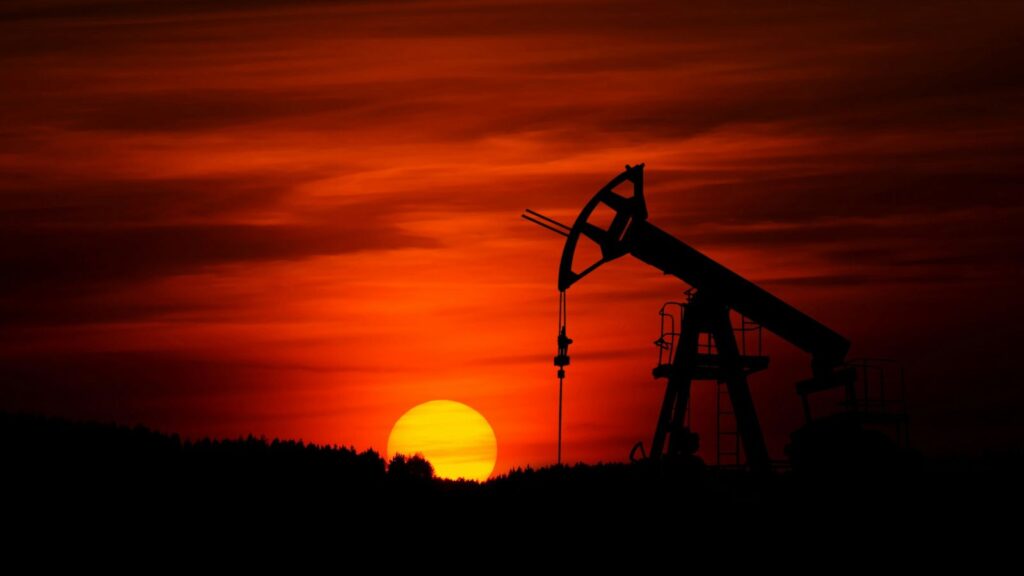
South Asia’s exposure to the Middle East is also squarely shaped by its reliance on imported energy. India sources more than 85 per cent of its crude oil from Gulf countries, while Bangladesh, Pakistan, and Sri Lanka likewise depend on petroleum products and liquefied natural gas (LNG) from the region to sustain electricity generation, industrial output, and transportation systems.
The Strait of Hormuz, one of the world’s most strategically sensitive maritime chokepoints, carries roughly one-fifth of globally traded oil and LNG. Tankers transporting Gulf crude must pass through this narrow corridor before reaching Asian markets, meaning even perceived disruptions can trigger volatility in global energy prices. Energy markets often respond as much to geopolitical risk as to actual supply disruptions. A recent International Energy Agency (IEA) analysis shows that insurance premiums, freight rates, and shipping delays tend to rise well before physical supply constraints emerge, pushing up import costs for energy-dependent economies like those in South Asia.
A $10 increase in crude oil prices can widen India’s current account deficit by around 0.3 per cent of GDP, while reducing economic growth by roughly 0.5 per cent through higher inflation and rising import costs. Smaller economies with tighter fiscal margins, such as Pakistan or Sri Lanka, face even greater vulnerability as rising fuel costs increase subsidy burdens and place additional strain on public finances.
South Asia’s trade routes intersect maritime corridors increasingly affected by regional tensions. A large share of trade with Europe moves through the Red Sea and Suez Canal corridor, while energy imports depend on shipping routes through the Persian Gulf.
Export-oriented economies are sensitive to disruptions. Bangladesh, where the ready-made garment sector accounts for over 80 per cent of export earnings, could see its competitiveness erode as freight costs rise and transit times lengthen. India may face similar pressures, with over $75 billion in annual exports to the European Union relying heavily on stable shipping routes.
The crisis also underscores the urgency of diversification across South Asia. Expanding renewable energy and diversifying LNG suppliers could reduce exposure to supply disruptions. India has set a target of 500 gigawatts of non-fossil fuel power capacity by 2030, while Bangladesh and Pakistan are gradually increasing investments in solar and wind energy.
Strengthening macroeconomic buffers will be equally important. Although several South Asian central banks have rebuilt foreign exchange reserves after recent global shocks, vulnerabilities remain. Pakistan’s reserves, for instance, have periodically fallen below three months of import coverage, highlighting the fragility of external balances during energy price spikes.
The current crisis is a reminder that South Asia’s economic stability remains closely tied to developments in West Asia. Reducing dependence on imported energy, strengthening reserves, and diversifying supply chains will be critical to building greater resilience against future geopolitical shocks.
Prof. Syed Munir Khasru Nikkei AsiaFebruary 14, 2026 https://asia.nikkei.com/opinion/can-a-new-government-finally-turn-bangladesh-around After 17 years without credible elections, Bangladesh’s Feb. 12 national poll was about more than choosing leaders. It was a bid to restore a basic contract between the state and its citizens. With the Bangladesh Nationalist Party (BNP) led by Tarique Rahma
Prof. Syed Munir Khasru Hindustan TimesFebruary 11, 2026 https://www.hindustantimes.com/opinion/people-at-the-heart-of-dhaka-delhi-ties-101770821076403.html The India-Bangladesh relationship is experienced before it is debated — in bus routes and border queues, in families crossing for treatment, and in markets stocked with goods that travel a few hundred kilometres rather than across oceans. It
Prof. Syed Munir Khasru The Indian ExpressFebruary 10, 2026 https://indianexpress.com/article/opinion/columns/india-china-us-bangladesh-elections-bnp-awami-hasina-jamaat-10523946 Over the past decade, Bangladesh has emerged as South Asia’s second-largest economy. Its growing influence, however, is shaped by more than GDP alone. Anchoring the northern edge of the Bay of Bengal, the country underp




0 Comments