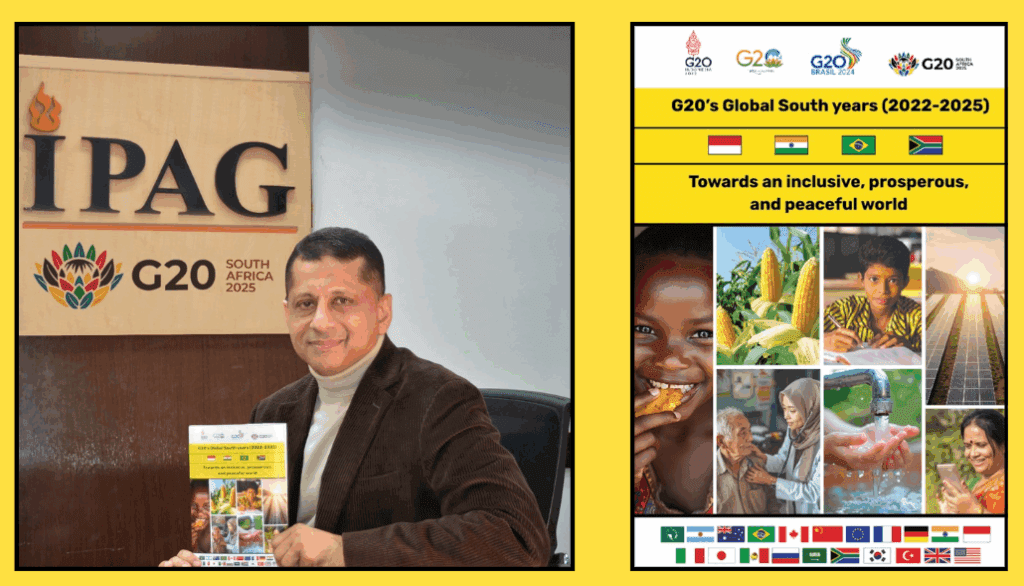
G20’s Global South years (2022–2025): Towards an inclusive, prosperous, and peaceful world
Post Date
23 November, 2025
Author
Ipag
As leaders of G20, world’s premium forum of twenty most politically and economically powerful nations, meets from Nov 22-23 in Johannesburg, South Africa, The Institute for Policy, Advocacy and Governance (IPAG), led by it’s Chairman, Prof. Syed Munir Khasru is being the voice of developing Global South by launching its publication in Johannesburg, “G20’s Global South years (2022–2025): Towards an inclusive, prosperous, and peaceful world”.
The book is a comprehensive account of four consecutive G20 Presidencies from 2022-25, led by the developing Global South – Indonesia, India, Brazil, and South Africa respectively. With chapters contributed by G20 Sherpas and leading G20 experts, It offers rare insights into how each G20 Presidency worked to move the G20 beyond crisis response and toward long-term structural transformation, particularly for developing economies.
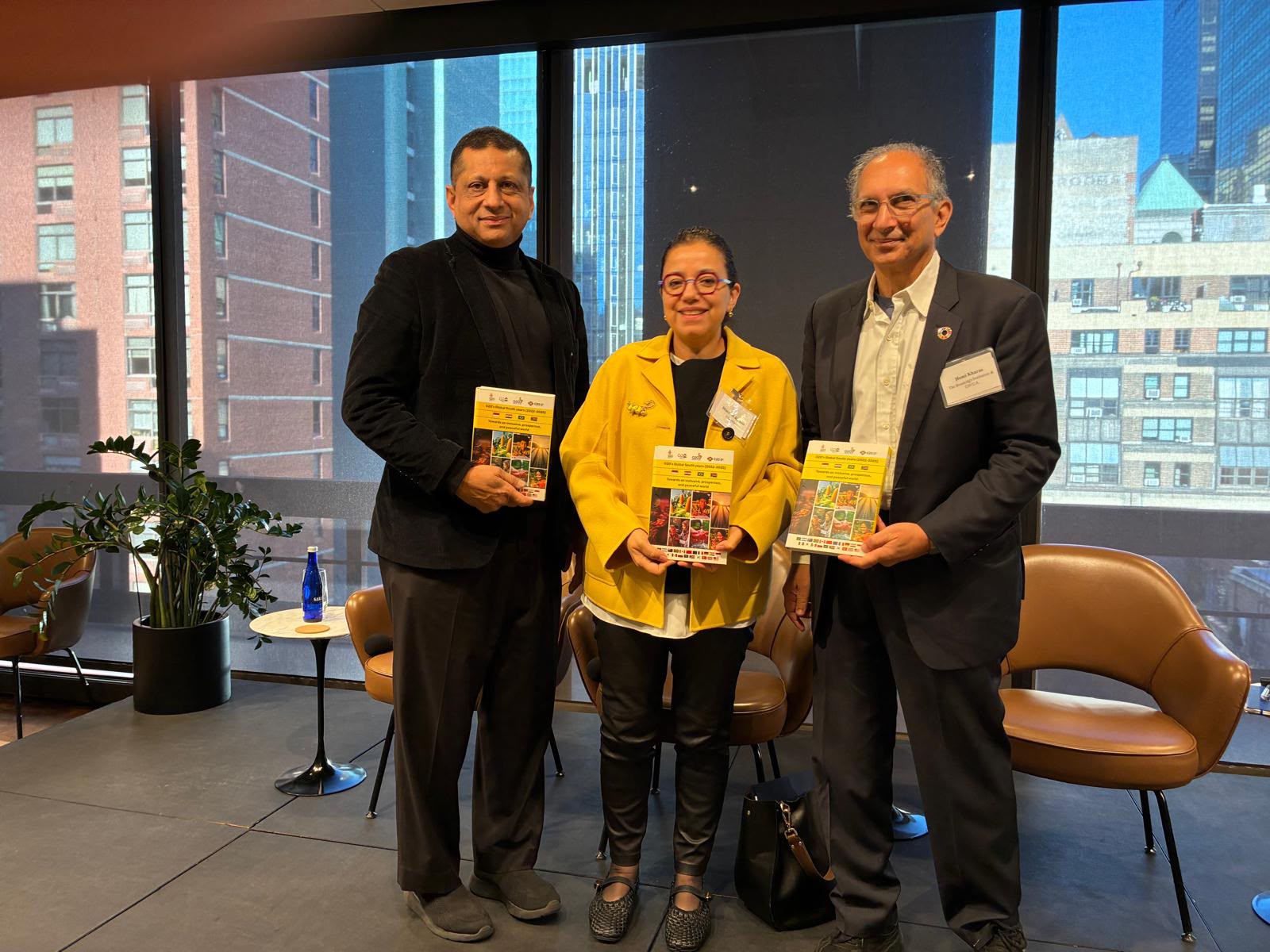
IPAG International, US, with its new office based in Washington DC has formally launched its publication, G20 Global South Presidencies (2022–25): Indonesia, India, Brazil, and South Africa, today in New York as part of the G20 US Presidency 2026 think tank process and covering the launch for North America. The session was moderated by Dr. Homi […]
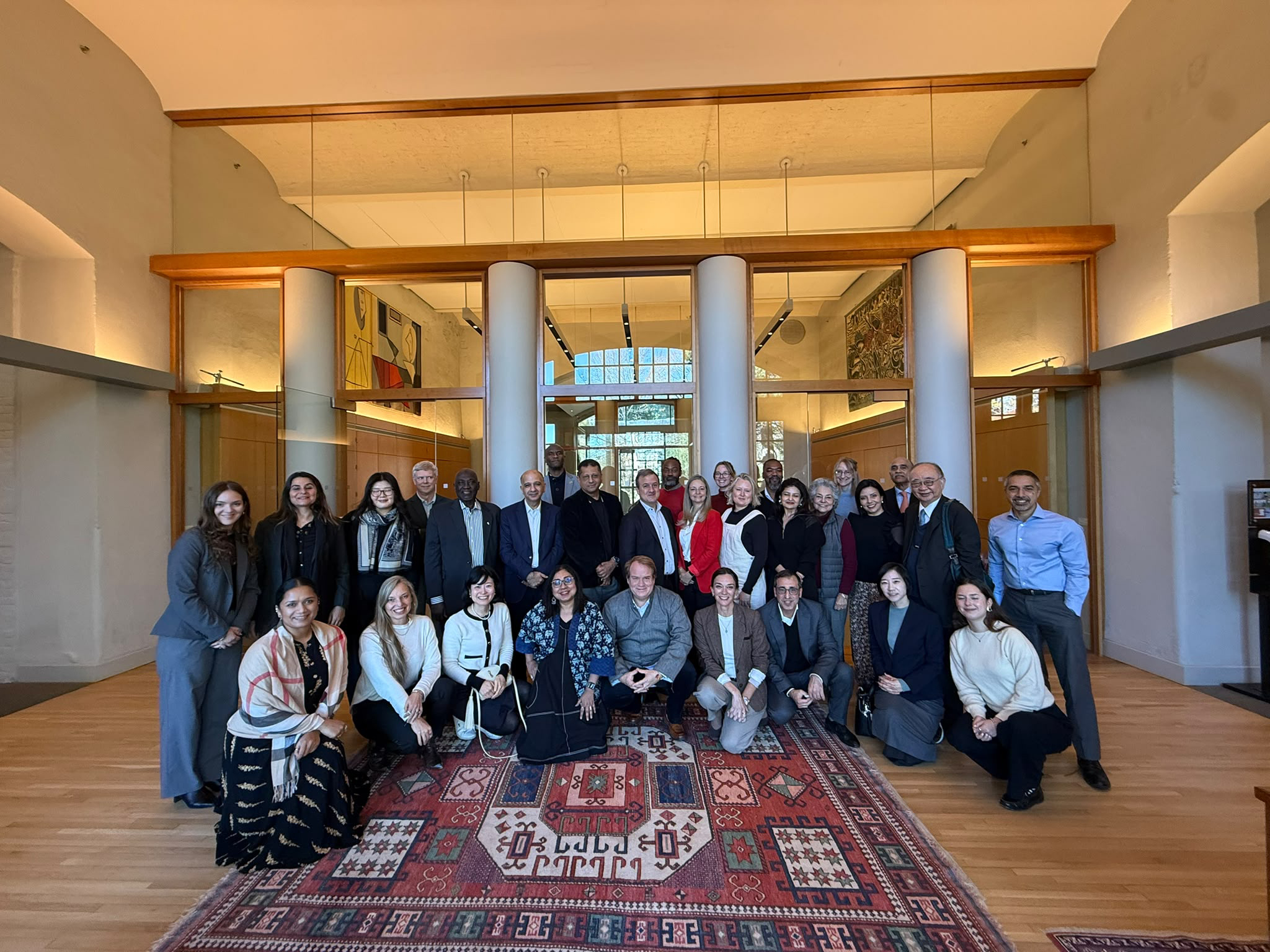
Prof. Syed Munir Khasru, Chairman of the Institute for Policy, Advocacy and Governance (IPAG) and member of the G20 US Think Tank Advisory Council, participated in the high-level retreat, “New Directions for UN-G20 Collaboration in the Age of Uncertainty,” held on November 16–17, 2026, at the Pocantico Center of the Rockefeller Brothers Fund in Tarrytown, […]
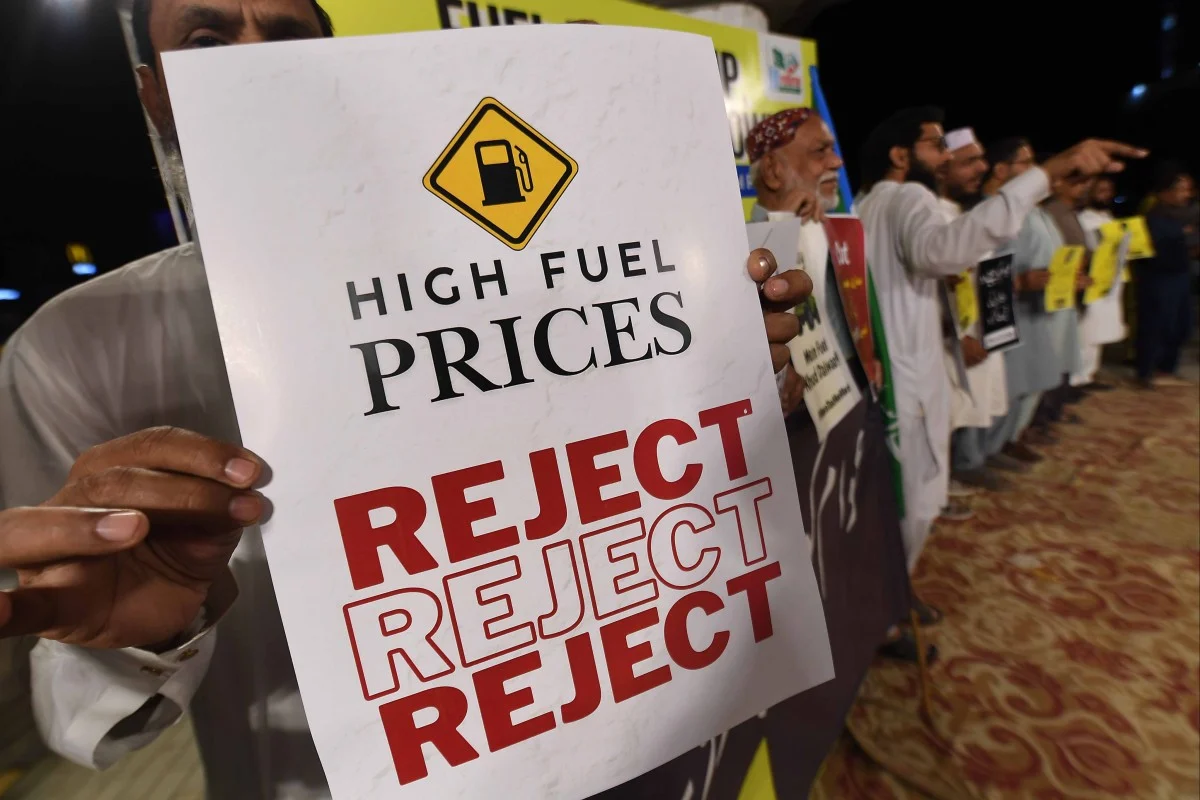
Prof. Syed Munir Khasru South China Morning PostOctober 20, 2026 https://www.scmp.com/opinion/asia-opinion/article/3371271/energy-shock-could-spark-asias-next-debt-crisis?module=perpetual_scroll_0&pgtype=article A country need not run out of money to find itself in a debt crisis. It only has to run short of US dollars to pay for its energy. At the recent International Monetary Fund-World Bank


0 Comments